From the Studio: Monster Mash

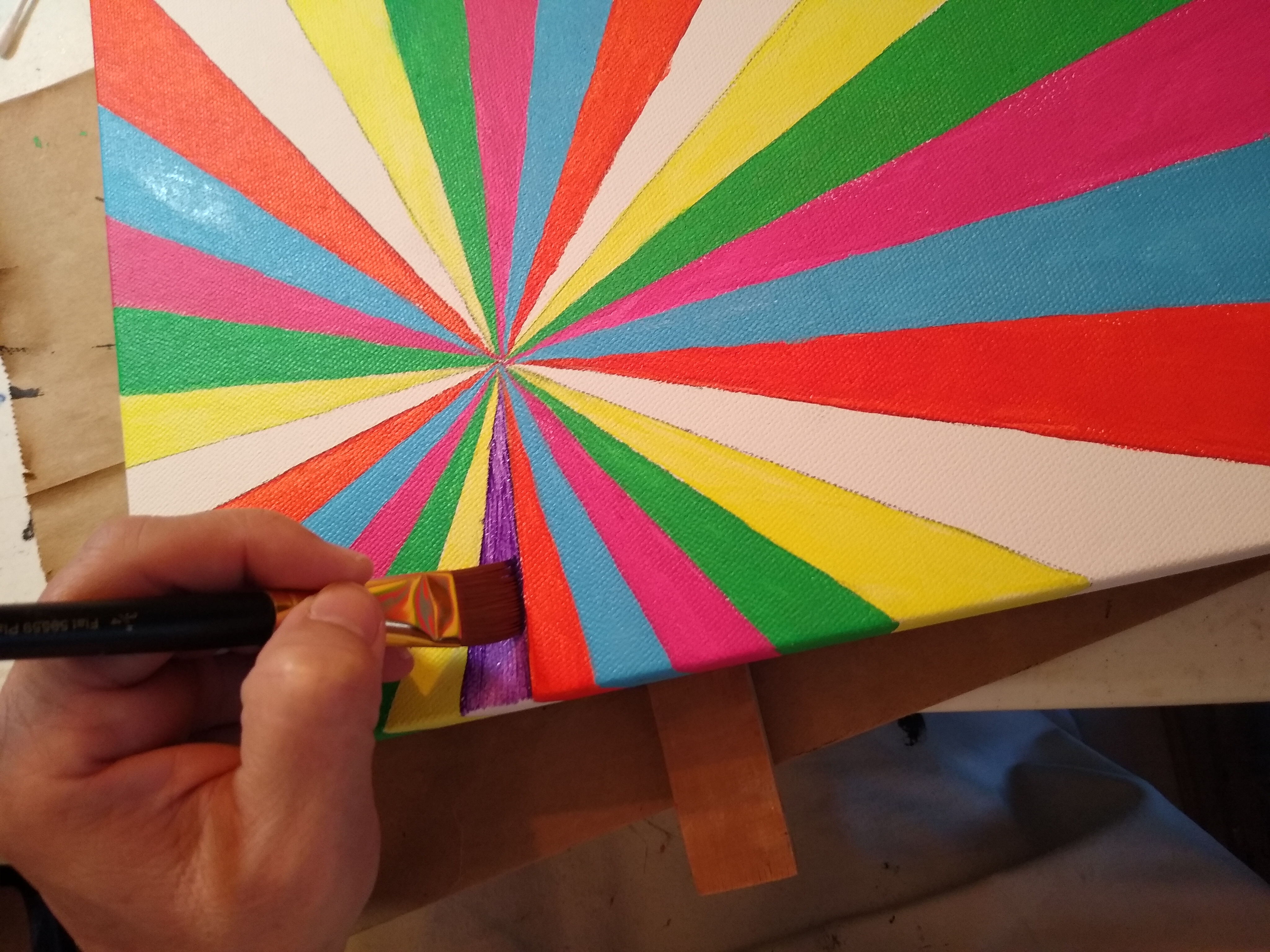
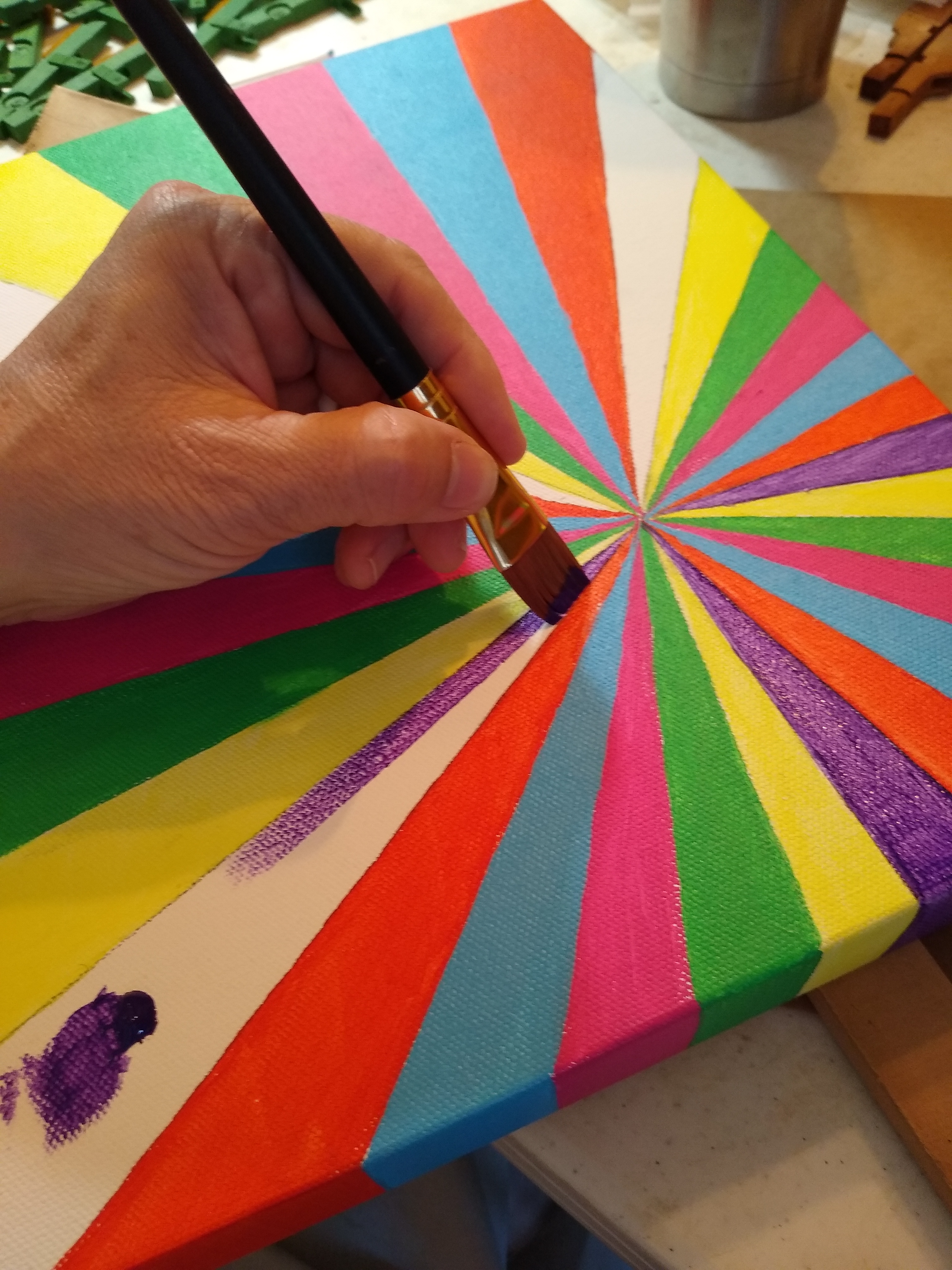
Welcome back to my piano art studio. Please allow me to share with you the latest creation from the Encore studio, and tell you why and how I stepped outside of the box for a change.

In our family, the time between dinner and bedtime are often spent watching a couple favorite TV shows or a movie. Iโ€™ve taken to cleaning piano parts while I watch, as a way to โ€œredeem the time.โ€ Itโ€™s fairly tedious work that requires no mental exertion whatsoever, so itโ€™s the perfect thing to keep my hands busy while my mind is at rest. Anything that cannot get a water bath gets a good scrubbing with a wire brush. Then I separate the many pieces with a pin extractor built expressly for this purpose. The pins are collected into a jar, and the pieces are sorted and stored. Some of them after separation, if they donโ€™t have felt on them, can get that water bath, which gets them cleaner than brushing alone.

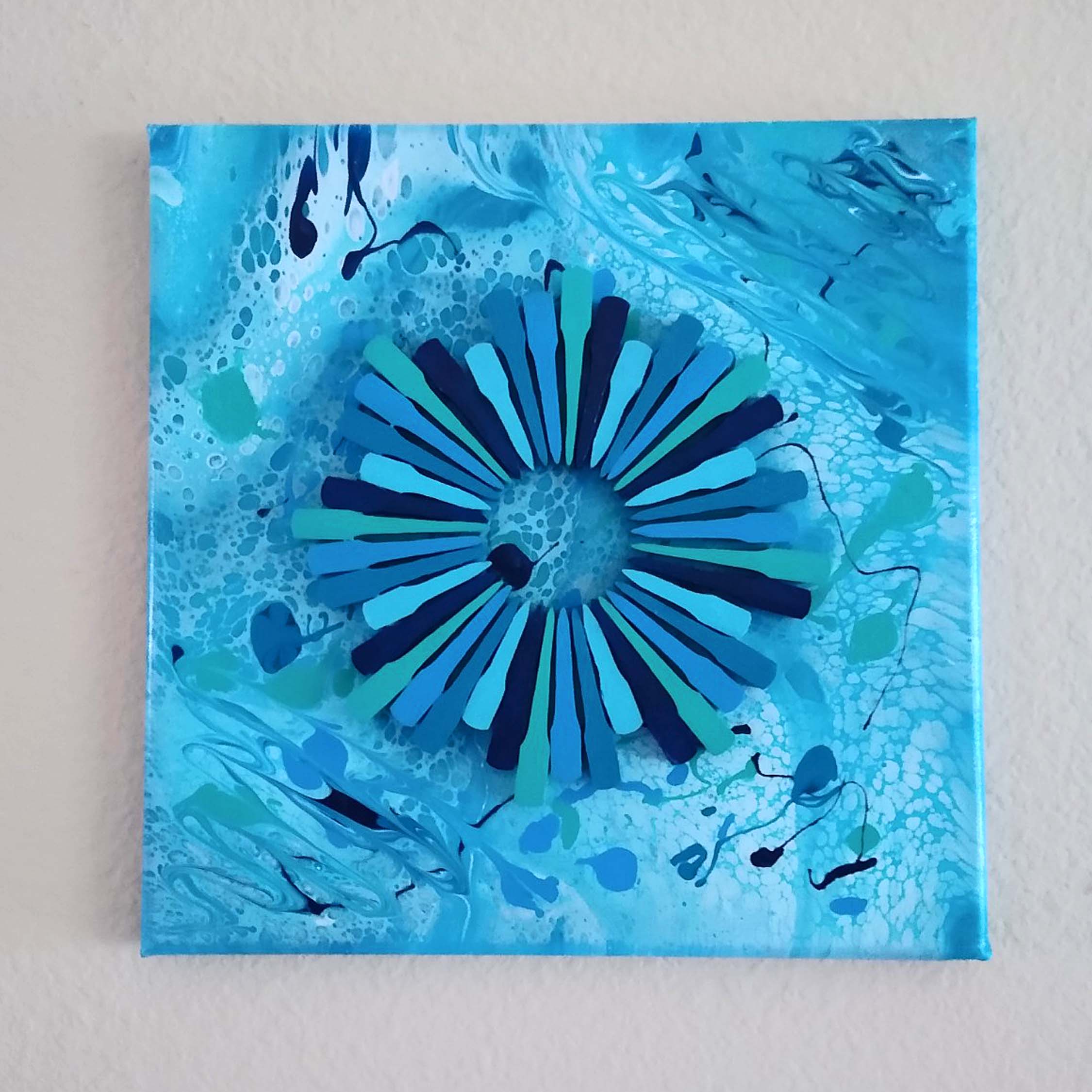
One night as I scrubbed, separated, and sorted, I ended up with quite a few wippens that still had a flange glued to them. The glue was stubborn, and I wasnโ€™t able to break them apart. I held one of them up and said to my 19-year-old daughter, โ€œHey, this kinda looks like a zombie.โ€ She agreed. Now, if my childrenโ€™s fascination with zombies is any indication of the general popularity of these mythical undead, then I thought perhaps I should look into actually using the zombies in a painting.

My paintings all get musical names. Itโ€™s a thing I do. Sometimes I use a single term that describes the theme or purpose for a particular piece. Sometimes itโ€™s a song title. Naturally, my mind went straight to the song โ€œMonster Mash.โ€

With Halloween fast approaching, I pushed myself to get this project out of the โ€œdoโ€ stage and into the โ€œdoneโ€ stage. The hardest part was deciding which colors to use and how to use them. I listened to recordings of the song and learned that it came out in 1962.

โ€œWhat if I used a color palette from the 60’s?โ€

โ€œGreat idea, Angela!โ€

โ€œThank you!โ€

(Donโ€™t mind me. Iโ€™m just talking to myself. Lol)

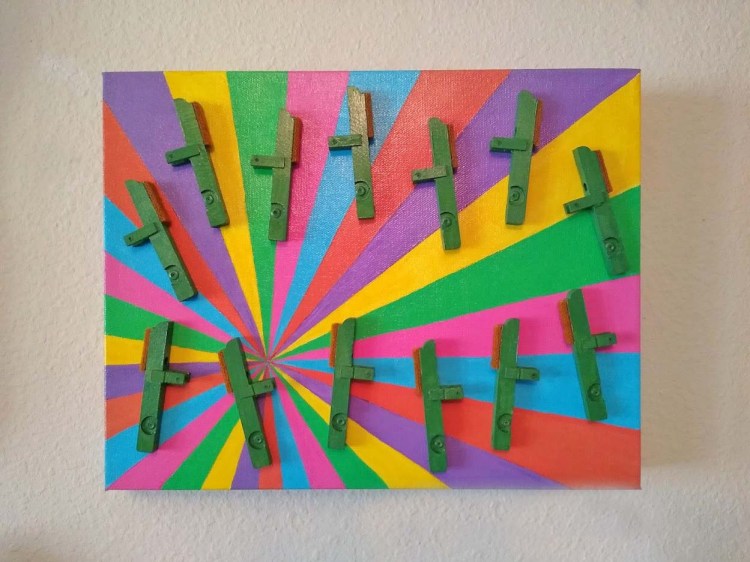
Not all wippens look alike, and only one piano has given me a set suitable as zombies. But if I put 13 zombies on each canvas (Yes, I chose that number deliberately.), I have enough for five paintings. In my Google search of 60’s colors, I also found five patterns I could use in the background. In that way, although I employ the same color scheme for each one, changing up the patterns will allow me to present five one-of-a-kind paintings.

It took four tries to get each color just exactly as I wanted it, neither too psychedelic nor too understated. I have no formal training in art, so mixing paints is more a matter of happenstance for me than science. But I learned a lot in the process, including how to judge what the color will look like when dry. My math skills were put to use in determining the angle for each ray and its placement on the canvas. I used a protractor and ruler to measure the angles and mark the lines; but when it came time to paint, I used only a three-quarter-inch flat brush and a steady hand. After all, this is a party, so I didnโ€™t want it to look too sterile. At the same time, I had confidence that I could paint in straight lines well enough to make this look professional.
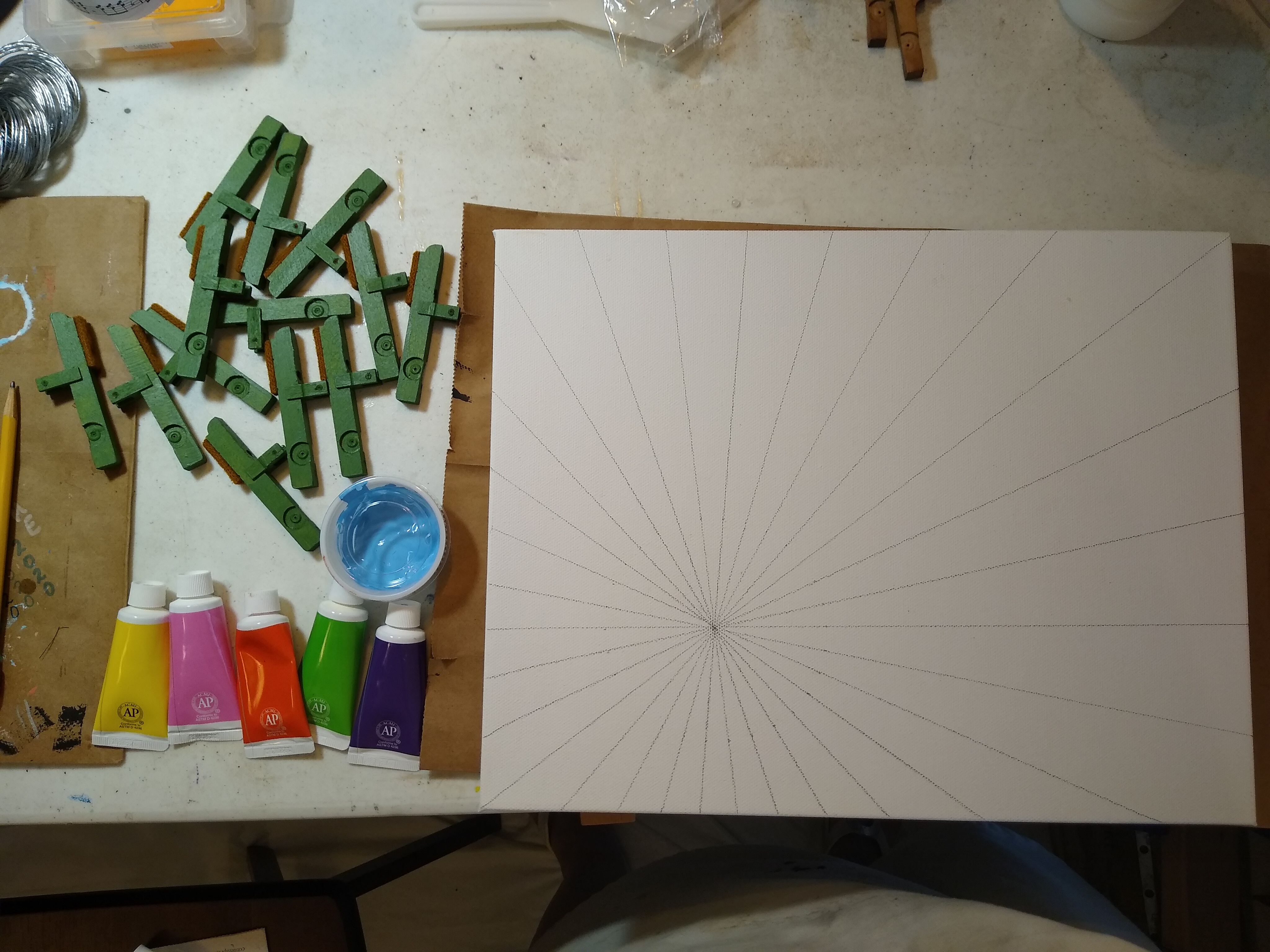
The first painting is complete, and thatโ€™s probably as far as Iโ€™m going to get for now. At this point I plan to release #2 in October 2021, and #3-5 will all be released in October 2022, in honor of the 60th anniversary of the hit song for which the painting is named.

โ€œMonster Mashโ€ #1 of 5 is currently available for sale on Etsy. Please check it out. I offer free domestic shipping on everything in the shop, and Iโ€™ll work with you for a fair price on international shipping.
โ™ฌ โ™ฌ โ™ฌ โ™ฌ โ™ฌ โ™ฌ

Thank you for joining me on this tour of the studio. I look forward to seeing you on the next one. Until then, I invite you to check out photos of my other work in the gallery. Enjoy the rest of your day!

From the Studio: Keyed Up

Welcome back to my piano art studio. Todayโ€™s tour features a piece known as โ€œKeyed Up,โ€ one of the longest-standing and most popular items in my inventory.

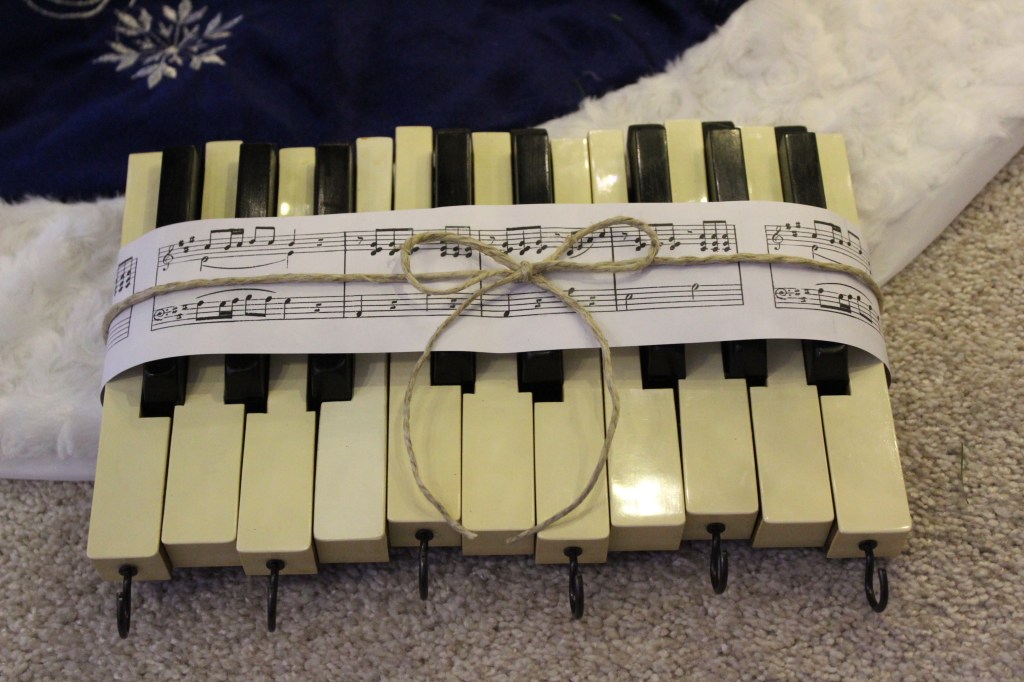
The first thing I ever made with piano keys was what I now call the small โ€œKeyed Up,โ€ a set of keys with their extensions cut off, leaving only the black and white parts we all recognize as piano keys. They were glued together in a staggered formation, rather than straight in a row, and I installed cup hooks on every other key. The first one utilized two full octaves, but I immediately reduced the length to 1ยฝ octaves, not only to help me better meet the demand for this item, but also to make it more stable.

“Keyed Up” small

Making a โ€œKeyed Upโ€

Preparation

First, the keys have to come off the piano. This is usually easy, but not always. It depends on how the piano is assembled. I can generally figure out fairly quickly how to remove the music shelf, action, fallboard, and any other strips of wood that stand in my way of getting to the keys. However, one manufacturer in particular (Knabe) has me stumped on a rather old piano. I never was able to get the fallboard off because I couldnโ€™t figure out how to access the screws upon which it pivots. But I needed the keys to fill an order, so I carefully maneuvered them up and off their pins then slid them out from under the fallboard.

As I remove the keys from the piano, and throughout the preparation process, I try to keep them in order. That is helpful, not only for creating the โ€œKeyed Up,โ€ but also other pieces in which I use keys together. They are always filthy dirty, so they get a bath in the sink with warm water and a special cleaning solution. I learned not to let them soak because soaking tends to loosen the glue that holds the ivories (whether genuine or not) and ebonies onto the extensions. Instead, I place them a few at a time into the water bath, scrub them on all surfaces with a grout/tile brush, then place them on wire racks to air dry. Drying time takes at least 24 hours, and preferably 2-3 days. Another hard lesson learned was that the โ€œKeyed Upโ€ can warp if thereโ€™s any moisture in the keys when itโ€™s assembled. That happened to the set I made for myself. I havenโ€™t received any negative feedback from others, so hopefully mine was the only one that messed up.

Once the pieces are thoroughly dry, if Iโ€™m making a small โ€œKeyed Up,โ€ I take the keys to my table saw and cut the extensions off. The extensions go into a bin for use in another project, and the cut ends of the keys get a careful sanding on the belt sander.

Assembly

Using wood glue, I mount the keys to a piece of 1/4-in. lauan plywood. I purchase the plywood in 2′ x 4′ sheets and cut it down to roughly 6″ x 10″ and sand all edges. When the glue is applied and all the keys are in place, I then clamp it down very securely and leave it to set up for a few hours or overnight. Old extensions cut from other keys help me apply equal pressure to all the keys.

Finishing Touches

When the clamps come off, I drill pilot holes into every other key, then screw in the cup hooks. On the back I place a half-sheet story behind the art, including details about this particular piece, then add two sawtooth hangers across the top and two felt bumpers (felts from the piano) in each of the bottom corners.

From the beginning, I designed the “Keyed Up,” both large and small, as a place to hang your car/house keys—keys for keys, if you will. Then one day a lady purchased a “Keyed Up” at a craft fair and told me, “I’m going to use this to hang up my necklaces.” What a brilliant idea! Now I’ve done the same, as have several others.

A Fresh Idea

The large โ€œKeyed Upโ€ includes the keys in their entiretyโ€”extensions and all. The term extension may be my own word, and it refers to the bare wood portion of the key that extends into the body of the piano and interacts with the action. On diagrams, Iโ€™ve never seen any other designation than simply key to represent the whole.

It didnโ€™t take long for me to realize that not all keys are the same. For the most part, the dimensions of the visible portions of the keys (the ebonies and ivories) are standard, but the lengths and styles of the extensions vary greatly, depending upon not only the size of the piano but also on the manufacturer. When I used shorter keys, I had no trouble leaving the bare wood portion โ€œblank.โ€ But when I began creating large โ€œKeyed Upsโ€ using the longer keys of upright grands, I received feedback suggesting that I come up with a way to fill in the negative space.

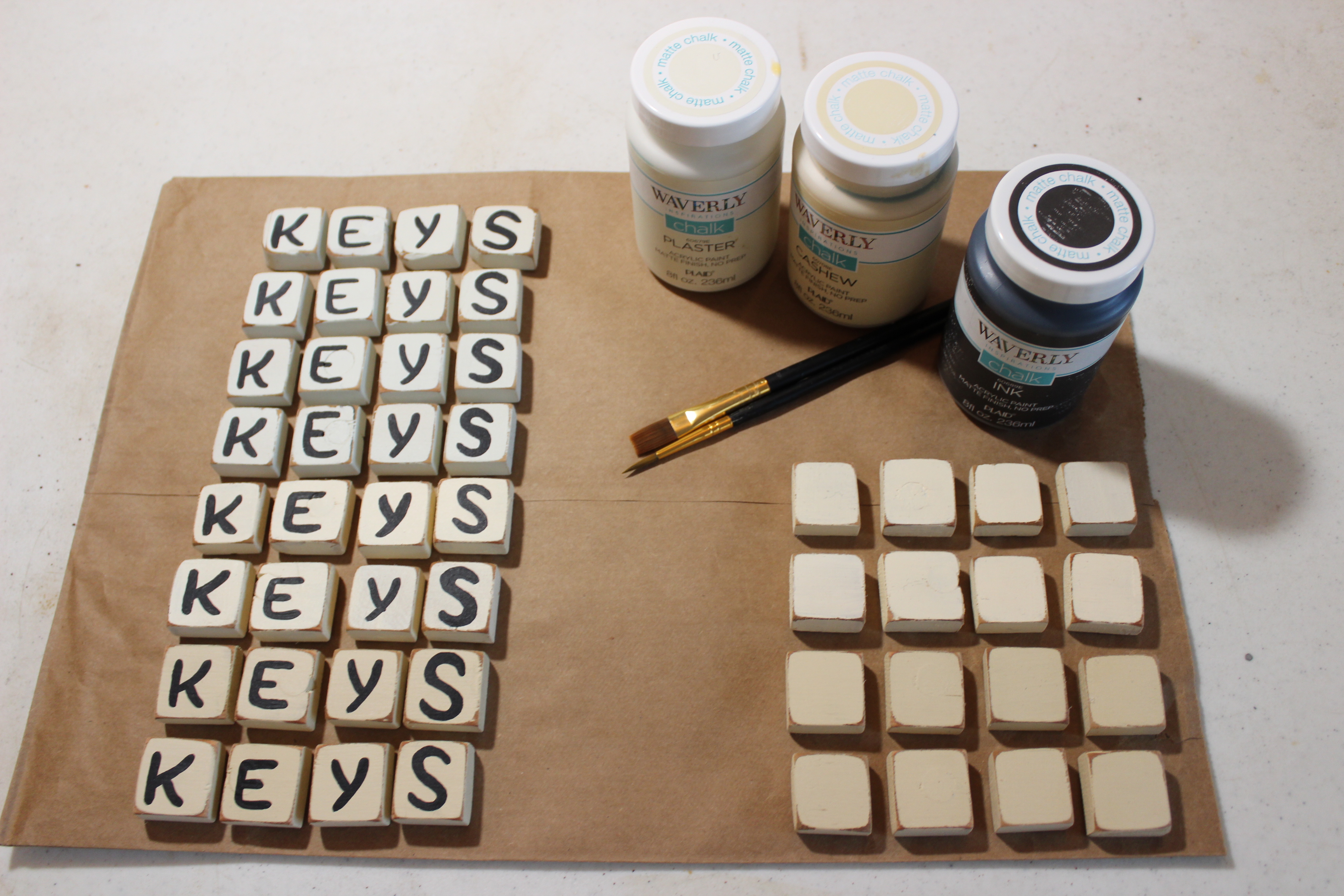
So I came up with an idea to fill in the space using a hammer from the piano and some hand-crafted lettered tiles (made from key extensions). I like it, but this isn’t for everyone. What if the buyer wants to hang something other than keys? Granted, “KEYS” could refer to the part of piano represented here, but maybe there’s something betterโ€”or at least differentโ€”that I can do.

Perhaps I could write a message across the key extensions. This seems like a good idea, but itโ€™s been hard trying to decide exactly what to write on them. Should they all be different from one another? All the same? And if the same, what in the world do I choose?

Will you help me decide? If so, please complete the survey below. And if you like, you can go a step further by leaving me a comment with your own suggestion or feedback.


Thank you for joining me on this tour of the studio. I look forward to seeing you on the next one. Until then, I invite you to check out photos of my other work in the gallery. Enjoy the rest of your day!


Coming Home

This girl has been trying to maintain not one, not two, but three blogs for the past few years. Needless to say, it got a bit overwhelming, especially since I tried writing on at least two of them every day. It took longer than expected, but overwhelm eventually hit, and I sort of crashed and burned. I couldn’t simply cut back, so I stopped writing altogether. A few previously scheduled posts kept my websites on life support until I was ready to wake them out of their literary coma.

But I did not stop creating piano art. In fact, here’s a sampling of the latest work to come from my studio.

And there is so much more still waiting to make the leap from idea to icon.

Not only am I happy to be working in the studio, I’m also very excited to be coming back to the blog after an extended absence so I can get my finger back on the WordPress pulse and reenter this society which I’ve come to know and love.

This past week, as I worked on reviving the writing mode within, I began by setting more reasonable goals for all three blogs. Yes, after much deliberation, I’ve decided to resume all of them, but I’ll bring a little common sense to the table this time.

What can you expect here at Encore?

The plan is to write once a week, on Tuesdays. I’ll continue my two series, From the Studio and Piano History, generally alternating between the two; and I’ll also share more curated posts from others. Curating does two things: (1) It helps my fellow writers expand their audience, and (2) It motivates me to spend nearly as much time reading as writing. After all, if we aren’t going to mingle with one another, why do we bother to write?

During my absence, WordPress changed. A lot. But change is good. Granted, in some ways, I feel as though I’m starting over again, knowing little to nothing about blogging. But it isn’t really true. I have a foundation upon which to build. And I’m truly excited about the new ways (or at least more accessible ways) to turn the blog into a platform for earnings. This makes my husband happy too, knowing that I now have the potential to see a return on the many hours of effort going into this endeavor.

I speak for many artists and small businesses when I say that the Covid-19 pandemic has robbed me of several opportunities to reach my audience face to face. Online sales are up, but they have not yet reached the full potential that was there with in-person craft fairs and art shows. I think it’s because the real me does not get to connect with the real you. That’s one reason why I’ve written this down-to-earth article. I want to speak candidly with you, take the mask off and be real with you. The financial aid available to other small businesses does not apply to me because I cannot state with certainty just how much income I’ve lost because I don’t pay myself a salary. The best I can do is estimate based upon historical sales, but that isn’t enough to slice through the red tape. No, I am dependent upon the love and concern of family, friends, and followers like you who are willing to say, “What you’re doing is important. It matters. And I want to help you keep doing it.”

How can you help?

There are four ways you can help Encore! Old Pianos to stay in business:

(1) Make a one-time or monthly donation. I recently added a donation button to Encore’s home screen. This is something new that awaited me when I returned to WordPress, and I decided to jump on board. That said, if you have found my site helpful and/or interesting, I’d appreciate your showing the love with a one-time or monthly donation.

Your donation will help me be able to dedicate more time to painting, creating, and writing. I’m currently working a part-time temporary job outside the house, but I have no desire to work permanently for someone else. My heart is here in my studio, and my passion is making people smile by providing them with unique piano art to celebrate their own talents and contributions to society. I’d love nothing more than to be able to stay home and keep doing what I’m doing—saving old pianos from the landfill—and to keep getting better at it by means of study and experience.

(2) Make a purchase. Do you see something here that you just can’t live without? Why not make it yours?

And what about the musicians in your life for whom you typically purchase a gift? Your child, sibling, parent who sings or plays an instrument? And don’t forget the teachers. Most of my items are actually purchased as gifts for music students, music teachers, choir/band directors, etc. Sometimes the entire band/choir will go in together to purchase a substantial gift for their leader.

(3) Spread the word. This is the most important of all, for the best advertising is word-of-mouth. Have you enjoyed getting a behind-the-scenes look at how my piano art comes together? Have you been able to make an informed decision on the purchase of a piano after reading one of my history articles? Or perhaps I’ve helped you identify the year your piano was made. Have you been delighted with the gems I share from my fellow bloggers? And have you been the giver—or recipient—of a piece of piano art, or perhaps a key chain or home dรฉcor item? Do you simply appreciate the fact that my end goal is to help protect our environment by repurposing old pianos that others throw out? Then tell your friends because maybe what resonated with you will also resonate with them.

(4) Donate your old piano and worn-out pieces. This last option is rather exclusive, but no less important than the rest. Perhaps you’re a piano technician, or you know one, who grieves each time you have to burn or otherwise discard the old, worn action parts. Why not send them to me? I can make great use of them.

Or maybe you own a piano that was destroyed in a fire or other disaster. I have traveled as many as 200 miles to retrieve a load of discarded pianos and sundry action pieces. And do you know how I learned about them? Through word-of-mouth! Someone passed my name along, and before I knew it, my sons and I were traveling two states over to meet a wonderful retired technician and his daughter and grandson. In fact, that’s how almost all of the 20 pianos came to me, through word-of-mouth.

And if the piano has special significance to you, I can give you a gift in exchange for your donation. Many a donor now has a piece of their cherished piano in their home, serving a practical or ornamental function while also reminding them of the many memories made while seated at those keys.

So, yes, I’m home. . .back home with my WordPress family, and asking you to receive me with open arms as I reach out to you. As I click the “Publish” button, I can almost hear you say, “Welcome home!”

From the Studio: Key Chains

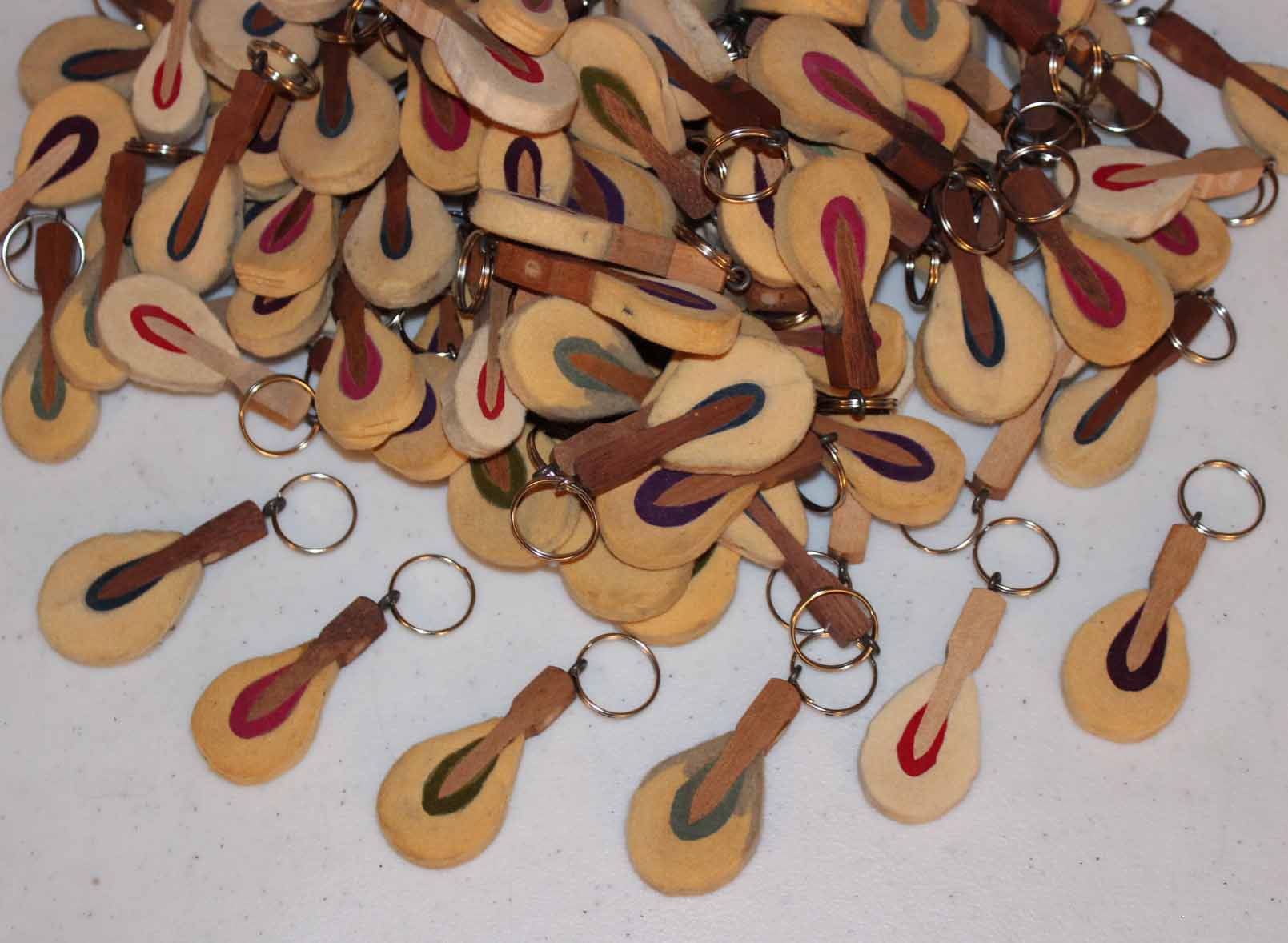
Hammer Key Chains (32)
Hammer Key Chains

Most of my piano art creations have a music-themed name given to them. The key chains are one notable exception, for I have never called them anything but what they are. And thatโ€™s okay.

Welcome back to the Studio Tour. Today I’m going to share with you how to make key chains from piano hammers and ebony keys. The key chains are my most popular item, and I also use them as gifts for college graduates, personalizing them with their name and the year. In fact, personalization has become quite popular this year, with most online buyers requesting that a name or initials be written on the hammer. I have considered offering personalization at craft fairs. Perhaps this fall I will make it so.

The Process

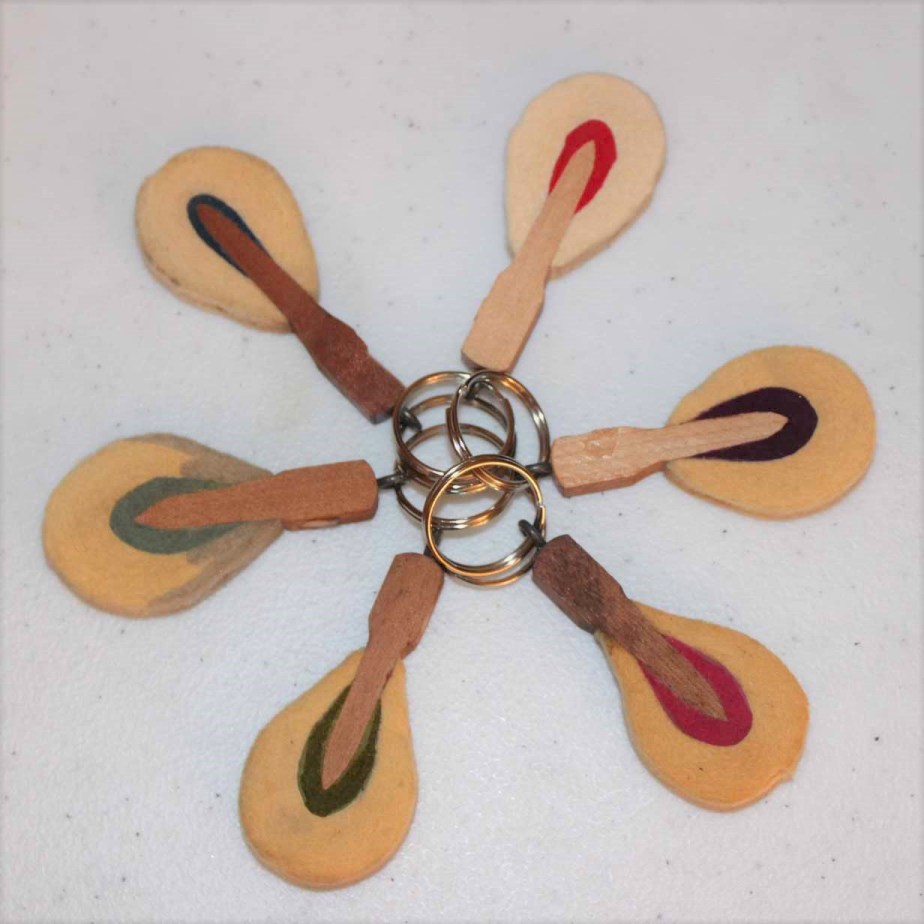
The first set of key chains I made were constructed of piano hammers, an eyelet screw that also came out of the piano (technically called a letoff regulating screw), and a key ring. I bought a package of 100 key rings on eBay and set out to make 100 piano hammer key chains.

The process is tedious but fun, at least for me. Iโ€™ll share my process with you, and then you decide if you would also like to make piano hammer key chains.

  1. Remove the entire action from the piano.
  2. Unscrew the 264 screws that hold the pieces in place.
  3. Separate the pieces as necessary, releasing the bridle strap from the bridle wire. (These often show dry rot, depending on their age.)
  4. Scrub each hammer with a wire bristle brush to remove the dust and dirt that has accumulated over as many as 100 years. Be sure to wear a mask.
  5. Using a table saw with a jig saw blade, cut the hammer away from the hammer shank. While youโ€™re at it, go ahead and separate the hammer shank from the hammer butt as well. Sort these pieces into their storage containers for later use in other projects.
  6. Scrub the letoff regulating screws while still attached to the letoff rail to remove dust and surface rust; trust me, itโ€™s easier this way.
  7. Using a hook from a pick and hook set, turn out each of the letoff regulating screws from the rail. Allow the letoff buttons to fall off the end of the screw, then collect the buttons into a storage container for future use in another project.
  8. Secure one of the hammers in a vice to hold it upright and steady; drill a pilot hole into the top of the hammer, then widen the hole with a size 2.0 drill bit.
  9. Screw one of the letoff regulating screws into the hole on the top of the hammer.
  10. Add a key ring to the regulating screw.
  11. Repeat steps 8-10 ninety-nine more times, and youโ€™re done, unless the key chains will be personalized.
  12. To personalize a key chain, first apply a coat of sealer to both sides of the hammer; let dry.
  13. Write the name/word/initials down the wood part of the hammer with a fine-tip paint pen that will contrast well with the color of the wood.
  14. Apply a second coat of sealer over the ink to keep it from smudging; let dry.

So, what do you think? Are you ready to make a batch of piano hammer key chains? If not, feel free to shop in my store for one that I made for you.

No Screws

There is another design I created, one that does not use the regulating screw. Instead, I drilled a hole through the hammer near the top, using a step drill bit with long tapers. This design came about when I tried making my second batch of 100 key chains, but the first five regulating screws broke when I had them screwed almost all the way into the hammer. I concluded that those screws were too degraded with rust to be useful. They didnโ€™t appear rusty, but they had obviously been weakened by time and the elements.

Hammer key chains, Steinway (1)

In one of the pianos, an 1866 Steinway upright, I discovered some 25 hammers that already had a hole drilled into them. It served no purpose that I could detect, but appeared to be part of the design. I took advantage of that pre-made hole to make more key chains. The hole goes from front to back rather than from side to side. This is inconvenient for the purpose of displaying the key chains on the peg hooks; but the design does enable the hammer to lie flat against your keys when you add actual keys to the ring.

However, I do prefer to use the regulating screw in the construction of my key chains, so I went back to eBay and purchased some brand new ones. That way I would know for sure that they were strong enough for the task. It increases my cost a little, but it also improves the quality of my product.

Ebony

Next came ebony key chains. To date, I have not used regulating screws to make the ebony key chains, but only drill holes through the ebony and add the key ring. It sounds simple, but though there are fewer steps involved in making key chains from the ebonies, these steps can require more effort.

The ebonies are attached to key extensions, long pieces of wood (usually 12″-14″), by means of a special glue used specifically in the construction of pianos. The glue does degrade over time, and sometimes the ebonies pop off easily. Other times I soak them in a warm soapy sink bath, and am able to twist them apart. And sometimes I am powerless to separate them from the extension. Those ebonies are set aside for a different purpose.

I decided not to paint and buff the ebonies that show age, for the natural wear and tear of use has its own charm. I simply wash them, dry them, and polish them with a lint-free cloth and a touch of linseed oil.

Drilling the hole in the ebonies also takes more effort than drilling a hole in the hammer because ebony is a very hard wood. Yes, I have come across a few pianos that did not use genuine ebony for the sharps, but painted a softer, cheaper wood. Another technique is to cover the wood with black plastic. These are also cheaper and hold up better to use when the piano is being played. I save these sharps for other projects, and only use genuine ebony sharps to make my key chains.

Genuine ebony does not need to be painted because it is naturally brown-black in color. I have found some that were painted, and have removed the paint to allow the natural beauty of the wood to show through. They are quite stunning when they have been polished with the linseed oil, and the grains of the wood are visible!

Local Series

Recently I made a new batch of key chains to sell at the Sand Dollar Cottage, a gift shop/art gallery in Navarre that carries some of my piano art. This was the first time I ventured to write on the felt parts of the hammers, and it turned out successfully. Again, I sealed the surface before writing, and most of the pen colors came out nice and crisp. I made some “ebony” key chains for this purpose as well. These are not genuine ebony, but are actually made of plastic, as they came off an old electronic organ rather than a piano. These key chains will be available very soon at the Sand Dollar Cottage.

If you happen to be in the area, do stop in and take a look around. The Sand Dollar Cottage is a co-op of about 50 local artists. Here you can find beautiful art, home dรฉcor, and souvenirs to take home to friends and family. Christmas ornaments are also sold year-round because folks tell me that they collect Christmas ornaments everywhere they go. The Sand Dollar Cottage is conveniently located in the Sand Dollar Plaza on Highway 87, northbound, just off Highway 98.


Thank you for joining me on this tour of the studio. I look forward to seeing you on the next one. Until then, I invite you to check out photos of my other work in the gallery. Enjoy the rest of your day!

Weekly Photo Challenge: Color Your World: Asparagus

This week’s challenge comes from Tourmaline and is called Color Your World. The color for this week is asparagus. As a vegetable, this just happens to be a favorite with my family, especially when drizzled with butter and baked with garlic and mozzarella. And as a color, asparagus also shows up quite often, especially in the felts of the keys.

Hammer Magnets (15)

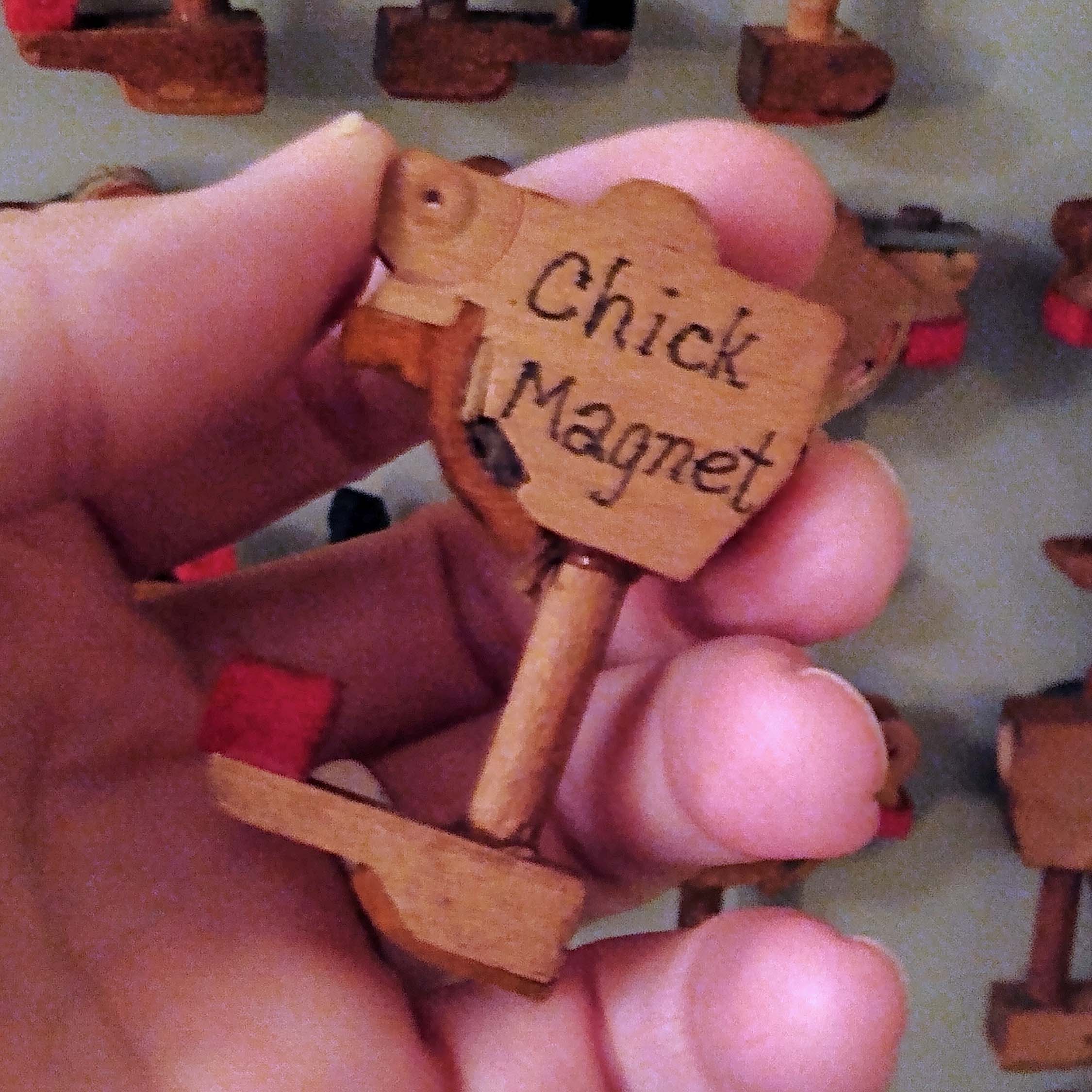
Piano hammers serve many useful purposes in my arts and crafts. These particular hammers have been made into refrigerator magnets.

Hammers also may become “heads” for my conductors and musicians…

…or “flowers” in a Piano Bouquet. This set was yellowed using a color wash, to resemble the variety of rhododendron known as the yellow hammer.

Yellow Hammers (5)
Piano Bouquet

Thanks again to Cee Neuner for her amazing directory, “For the Love of Challenges.” For the record, Cee’s directory lists not only photo challenges, but also writing and music challenges as well, and they are grouped by category. It’s very well organized.

Weekly Photo Challenge: Color Your World: Aquamarine

This week’s challenge comes from Tourmaline and is called Color Your World. The color for this week is aquamarine.

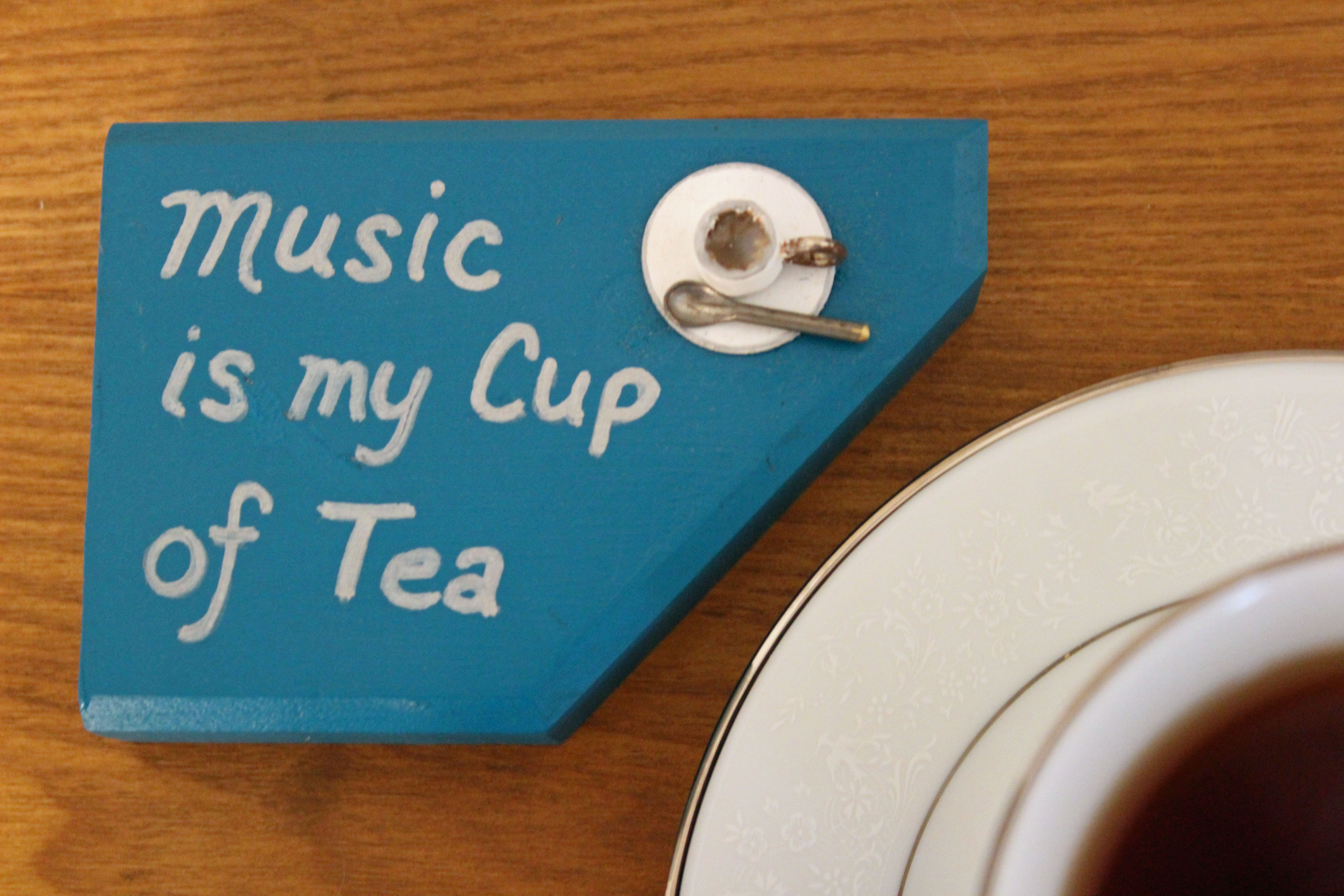
Cup of Tea blue (2)

The image above is called “Cup of Music,” and is made entirely from piano parts: washer, bushing, regulating (eyelet) screw, and damper spoon, all mounted on a block of wood from inside the piano.

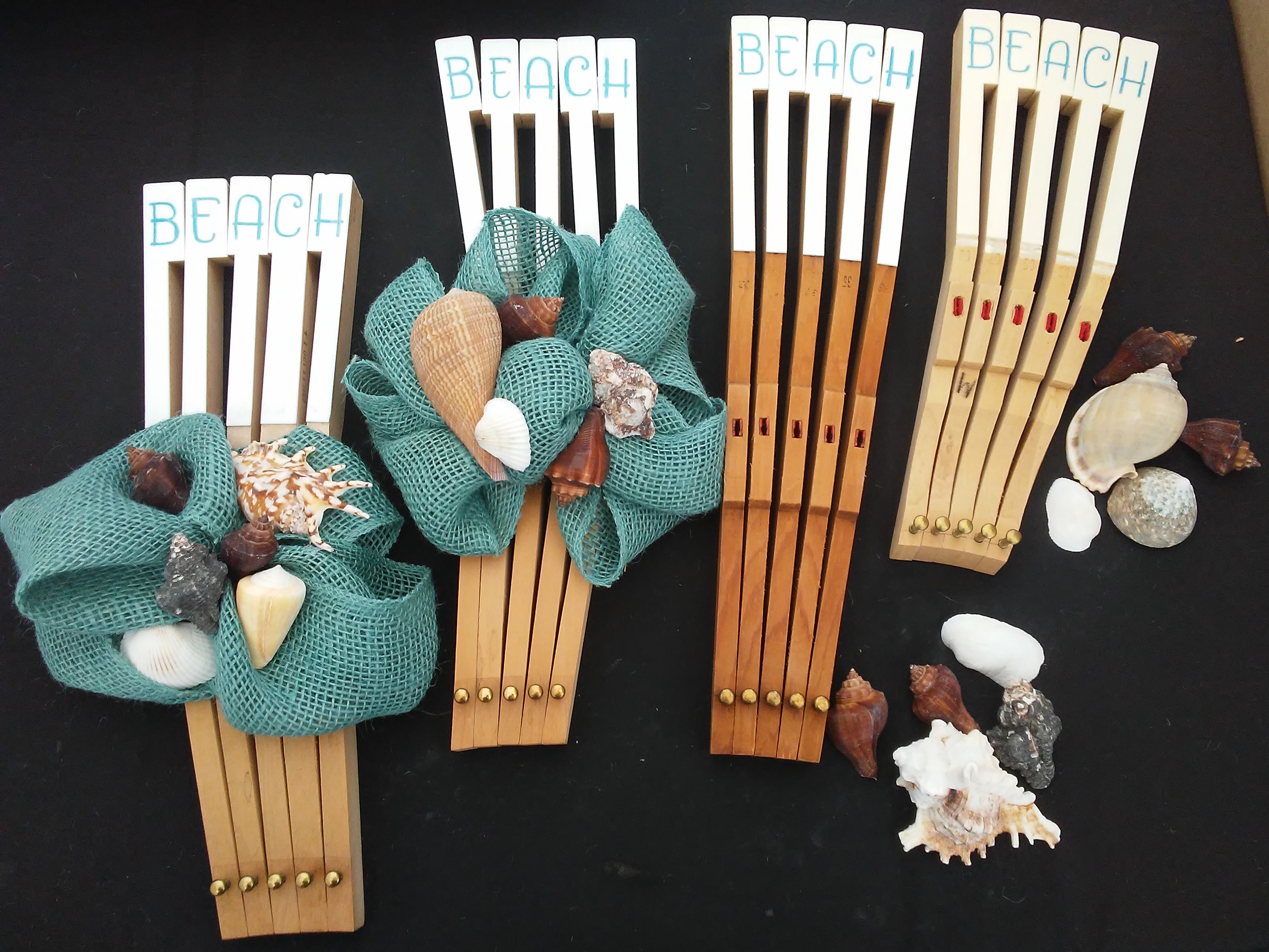
Below is a piece that goes by two names. To most of the world it is “Ocean Sounds,” but in Florida it is called “Beach Blues.” This is a special hometown name that bears significance to the folks who live here.

Beach (1)

Thanks again to Cee Neuner for her amazing directory, “For the Love of Challenges.” For the record, Cee’s directory lists not only photo challenges, but also writing and music challenges as well, and they are grouped by category. It’s very well organized.

Weekly Photo Challenge: All Lined Up

This week’s challenge comes from LifeLessons – a blog by Judy Dykstra-Brown, and is called All Lined Up. The challenge was posted on Monday, May 27. I don’t know how long it will run, but feel free to jump in with your own contribution whenever, for all you have to do is share a link to your post in the comments section of her post, at the link above.

Click the photos to enlarge and read the captions.

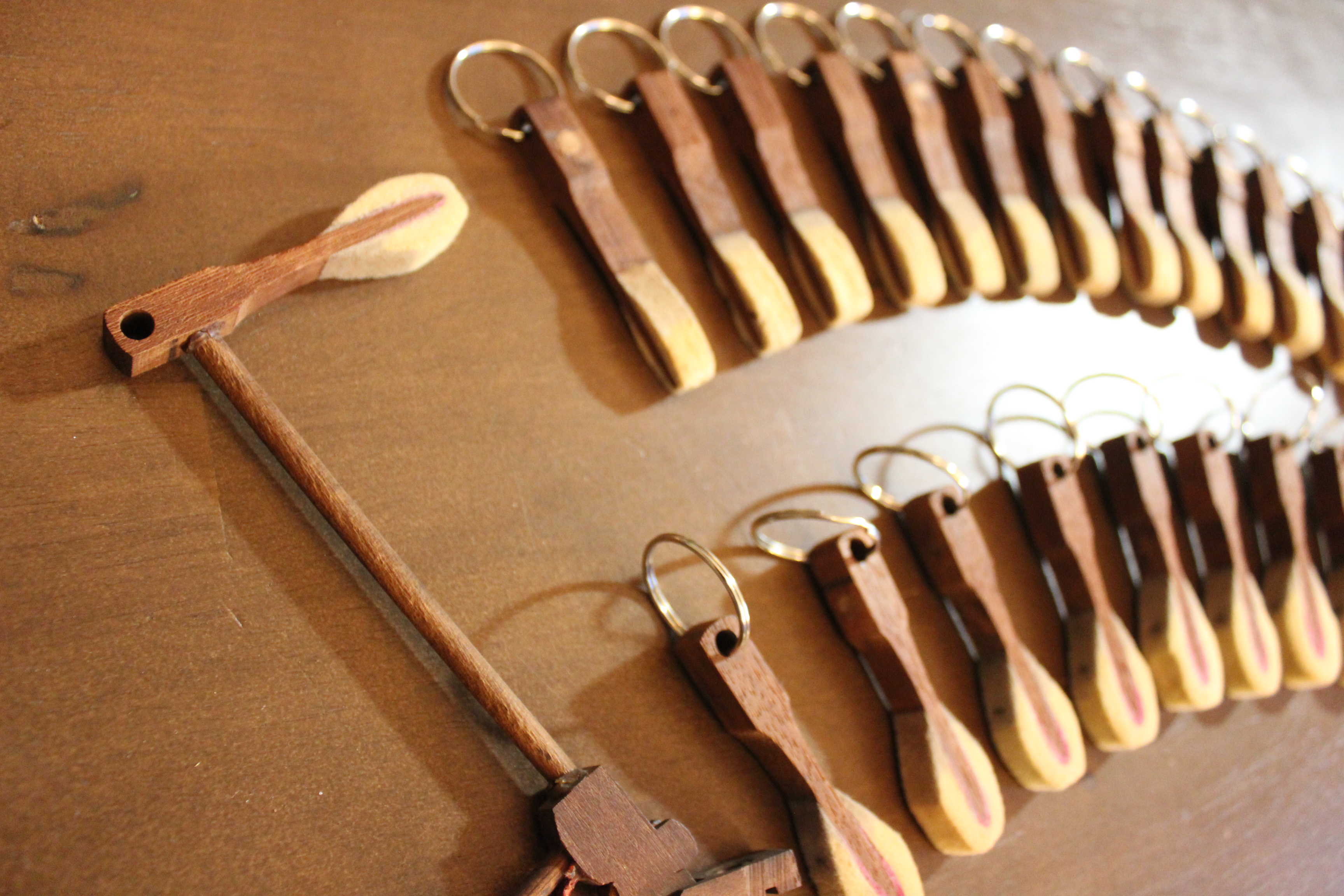
Some of this week’s photos are of completed projects, while others are of “raw materials,” but in every case, they are All Lined Up.


Thanks again to Cee Neuner for her amazing directory, “For the Love of Challenges.” For the record, Cee’s directory lists not only photo challenges, but also writing and music challenges as well, and they are grouped by category. It’s very well organized.

Longevity โ€” Piano Girl

I found this post a couple months ago, but have waited until now to share it. I saved it on purpose because in her poem, she is 51 years old, and this weekend I celebrate my 51st birthday. I too hope to be the “ninety-something grandma” in the nursing home who sits down to the piano and remembers the songs of her youth.

I have thought about this word many times in recent days. Longevity. Iโ€™ve often said I hope to be the ninety-something-year-old grandma playing the piano at the nursing home. My family usually chuckles or says, โ€œIโ€™m sure you will be!โ€ Typically, we think of longevity in reference to long life. Obviously, I have no wayย [โ€ฆ]

via Longevity โ€” Piano Girl


From the Studio: Just Beachy

Beach WIP (8)

Allow me to share with you the latest creation from the Encore studio, tell you why and how it came into being, and why it has two names.

Last year I had the pleasure of participating in a holiday craft show in Destin, Florida, where I met Carolyn Williams, the owner of Sand Dollar Cottage, an art gallery/gift shop in Navarre. She and several other artists were also vendors at the craft show, and we visited each otherโ€™s booths. Carolyn fell in love with my work and invited me to place some of my pieces in her gallery in Navarre. So in January I did just that!

Carolyn does an excellent job of organizing the pieces in her shop according to color, theme, etc., and not necessarily by artist. As it would happen, however, most of my things are all in one place because they are unique, being made of piano parts, and having nothing to do with beachy themes and muted colors. In short, they are their own theme.

So as time has allowed, Iโ€™ve been brainstorming, trying to come up with ways to combine piano art with beach art, to appeal to the musician who visits and/or lives at the beach. This was my first creation, but it will by no means be the last, as other ideas are simmering as well….

I went to work, collecting the keys that I would use to make the fans. I practiced my lettering, chose the pen that I would use to write on the keys, then went shopping for ribbon and shells. I thought about going to the beach to pick up shells myself, but Iโ€™ve been there, and I know it would have taken me a long time to collect the number of shells I would have needed, and time is money.

This slideshow requires JavaScript.

The next step was to figure out how to securely connect the keys to each other and mount them to the wall. I glued them together, but as very little of their surfaces actually touch each other, I reinforced the connections with mending plates at the top and wood plates toward the bottom.

Since I gave away my bow maker, I made these bows by hand, sewing them together with floral wire. Then I used a heavier wire to fasten them to the keys, tying off the wire in the back, and tucking it in between two of the keys. Using a hot glue gun, I secured the ribbon to the keys in front, so that it would not hang down from the weight of the shells, and I hot glued the shells in place on the ribbon. I also hot glued two round felts from the piano to the bottom of the keys in back, as bumpers to hold it off the wall.

The wood plate in fact serves multiple purposes: it reinforces stability, hides the floral wire, and displays the artist statement. After trimming the board to size and sanding the edges smooth, I applied wood glue where the board would go, then drilled five pilot holes along both the top and bottom, to attach it to each key using short screws from out of the piano. I also used a piano screw to attach the mounting hook.

Finally, I edited the story of my art to fit on the board, printed it out on labels, trimmed them down to size, and applied them to the board. With that, the project was done!

Actually, I skipped a step in processโ€”naming it. I had been working on the piece while at the Blues & BarBQ Festival at St. Josephโ€™s Church in Pensacola. In fact, that was where I worked on making the bows, attaching them to the keys, and gluing down the shells. I showed one of them to a lady whom I had met at the show, and she purchased it on the spot. I was thrilled that she liked it, but I said, โ€œI donโ€™t know what to call it yet, or how much I want to ask for it.โ€

She replied, โ€œWell, youโ€™d better think about it. Iโ€™m going to walk around some more, and Iโ€™ll be back to get your answer.โ€

So I put up photos on Instagram with a plea for help in naming this piece. I like to give my works musical names whenever possible. I had been listening to Blues music for the past day and a half at the festival, and had come to realize how important that genre is to this region. It is in no way limited to Louisiana, but colors the cultures of southern Mississippi, southern Alabama, and western Florida as well. And so I thought, โ€œBeach Blues…โ€ to reflect the region for which this piece was made in the first place. When the lady returned, I had a name and a price. She was honored by the name, but she said my price was too low, so I raised it at her insistence.

A little while later I saw that I had received a response to my plea for help with the name. A friend from Virginia had suggested โ€œOcean Sounds,โ€ and I liked that equally well. Reading the name brought to mind soothing piano music with an overture of crashing waves, and I knew it would do the same for my customers. I decided to use both names. The piece will be called โ€œBeach Bluesโ€ when sold locally here in the Florida area, but it will be called โ€œOcean Soundsโ€ when sold online or in Virginia. (Yes, I am going back to my beloved Virginia later this year to do two shows!)

In honor of my friend who gave me the name “Ocean Sounds,” I would like to share a video of piano music with ocean sounds. I hope you enjoy it.

The creation of โ€œOcean Sounds,โ€ or โ€œBeach Blues,โ€ whatever you prefer to call it, is somewhat symbolic of my assimilation with the place in which God has put my family and me. It was not easy making the transition from Virginia to Florida. Yes, I was born here in this state, but Virginia is my family’s birthplace, and the place that I call home. Yet I have learned to be content here. This is where God brought us, and this is where God wants us. Itโ€™s a good place to beโ€”in the center of Godโ€™s will. Today that place, the center of Godโ€™s will for my husband and me, is Florida. Someday He may move us somewhere else. But until then I will listen to the Beach Bluesโ€”not forsaking the memory of the Ocean Sounds, but choosing to live in the present with contentment.

May you, too, find contentment in the place, and with the people, where God has placed you. God bless!


Thank you for joining me on this tour of the studio. I look forward to seeing you on the next one. Until then, I invite you to check out photos of my other work in the gallery. Enjoy the rest of your day!